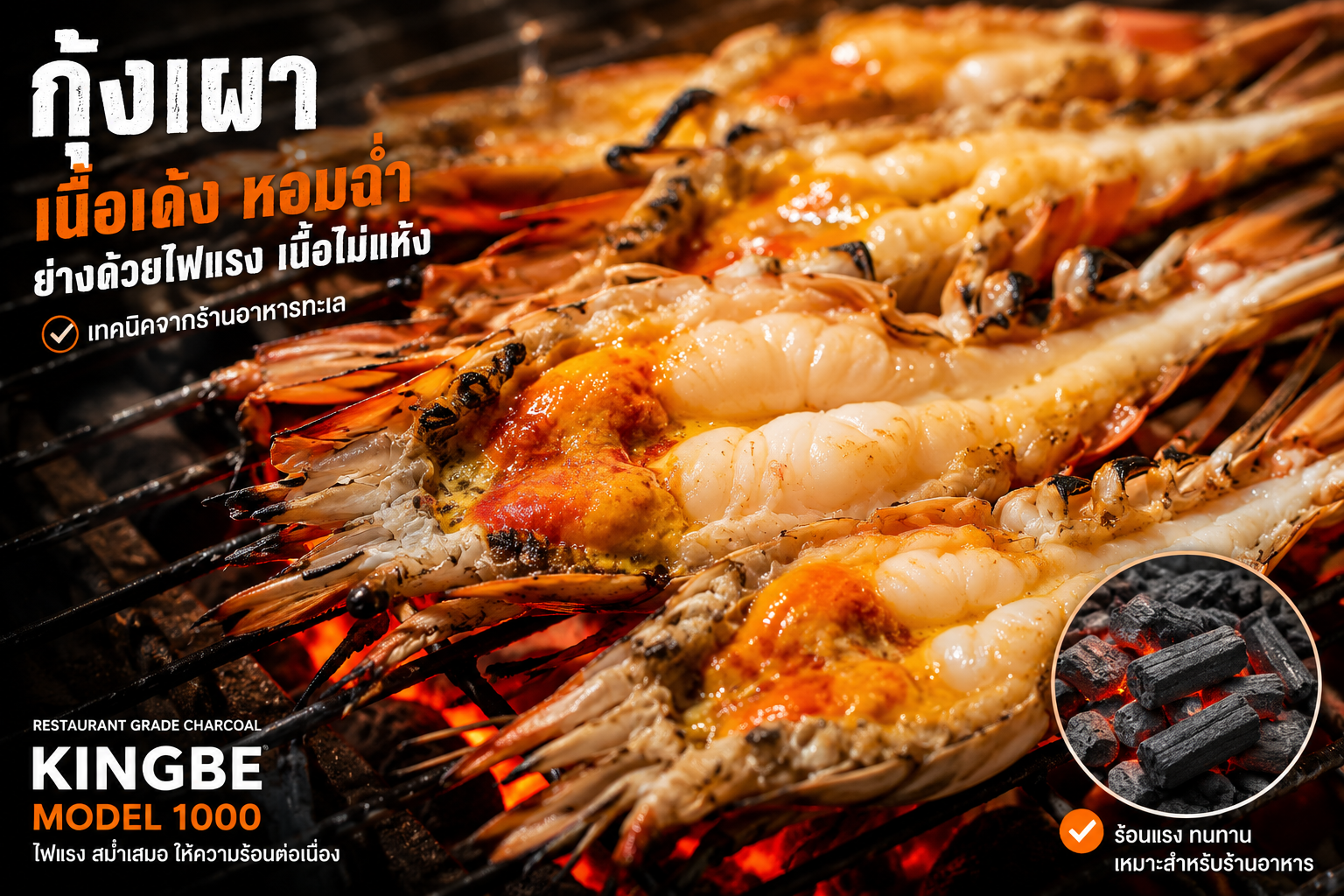
Should Grilled Shrimp Be Cooked Over High Heat or Low Heat?
Restaurant Techniques for Juicy, Firm Shrimp
Grilled shrimp is one of the most popular seafood dishes across Asia. Whether served in seafood restaurants, BBQ restaurants, or outdoor grilling events, perfectly grilled shrimp should have a firm texture, natural sweetness, and a rich charcoal aroma.
Many people assume that shrimp should be cooked slowly over low heat. However, professional chefs often use a different approach. For medium to large shrimp, high and consistent heat is usually the key to achieving better texture and flavor.
Why High Heat Works Better for Shrimp
Shrimp contains a high percentage of water. When exposed to heat for too long, moisture gradually escapes from the meat, causing the shrimp to become dry and tough.
Using high heat for a shorter period helps cook the outer shell quickly while preserving moisture inside the shrimp.
Benefits of High Heat Grilling
-
Firmer and juicier texture
-
Better moisture retention
-
Faster cooking time
-
Improved charcoal aroma
-
More attractive color and presentation
Common Mistakes When Grilling Shrimp
Many operators experience problems such as:
-
Cooking over weak or inconsistent heat
-
Grilling for too long
-
Frequent temperature fluctuations
-
Uneven cooking across the grill surface
These issues often result in dry shrimp, reduced sweetness, and inconsistent food quality.
A Simple Restaurant Method
For medium to large shrimp, many restaurants follow a straightforward process:
-
Preheat the grill until the charcoal is fully ignited.
-
Place the shrimp directly over high heat.
-
Grill the first side for approximately 3 to 4 minutes.
-
Turn the shrimp and continue grilling until fully cooked.
-
Serve immediately while retaining natural juices.
The exact cooking time depends on shrimp size, grill design, and heat intensity.
Why Consistent Heat Matters
High heat alone is not enough.
If some areas of the grill are extremely hot while others are too cool, shrimp will cook unevenly. Consistent heat allows operators to achieve predictable results, especially during busy service periods.
This is one reason why many restaurants prefer restaurant-grade compressed charcoal. Uniform charcoal size and stable burning performance help maintain a consistent cooking environment.
Recommended Charcoal for Seafood Restaurants
For restaurants that require strong and reliable heat, KINGBE Model 1000 Restaurant Grade Charcoal is designed for commercial grilling applications.
Suitable for:
Key Benefits of KINGBE Model 1000
-
High heat output
-
Consistent burning performance
-
Uniform briquette size
-
Reliable operation during peak service
-
Suitable for professional restaurant use
Conclusion
Perfect grilled shrimp is not only about using fresh ingredients. Heat management plays a critical role in achieving the desired texture and flavor.
For many professional kitchens, high and consistent heat produces better results than low heat over a long period. The combination of proper grilling technique and reliable restaurant-grade charcoal helps create juicy, firm shrimp with excellent charcoal flavor.
For seafood restaurants seeking consistent grilling performance, KINGBE Model 1000 Restaurant Grade Charcoal offers the stable heat required for professional cooking. |