Why Charcoal Matters More Than Most Restaurant Owners Think
The Hidden Factor Behind Food Quality, Customer Retention and Kitchen Efficiency
Many restaurant owners focus heavily on ingredients, recipes, sauces, and customer service. While these factors are important, one critical element is often overlooked: charcoal.
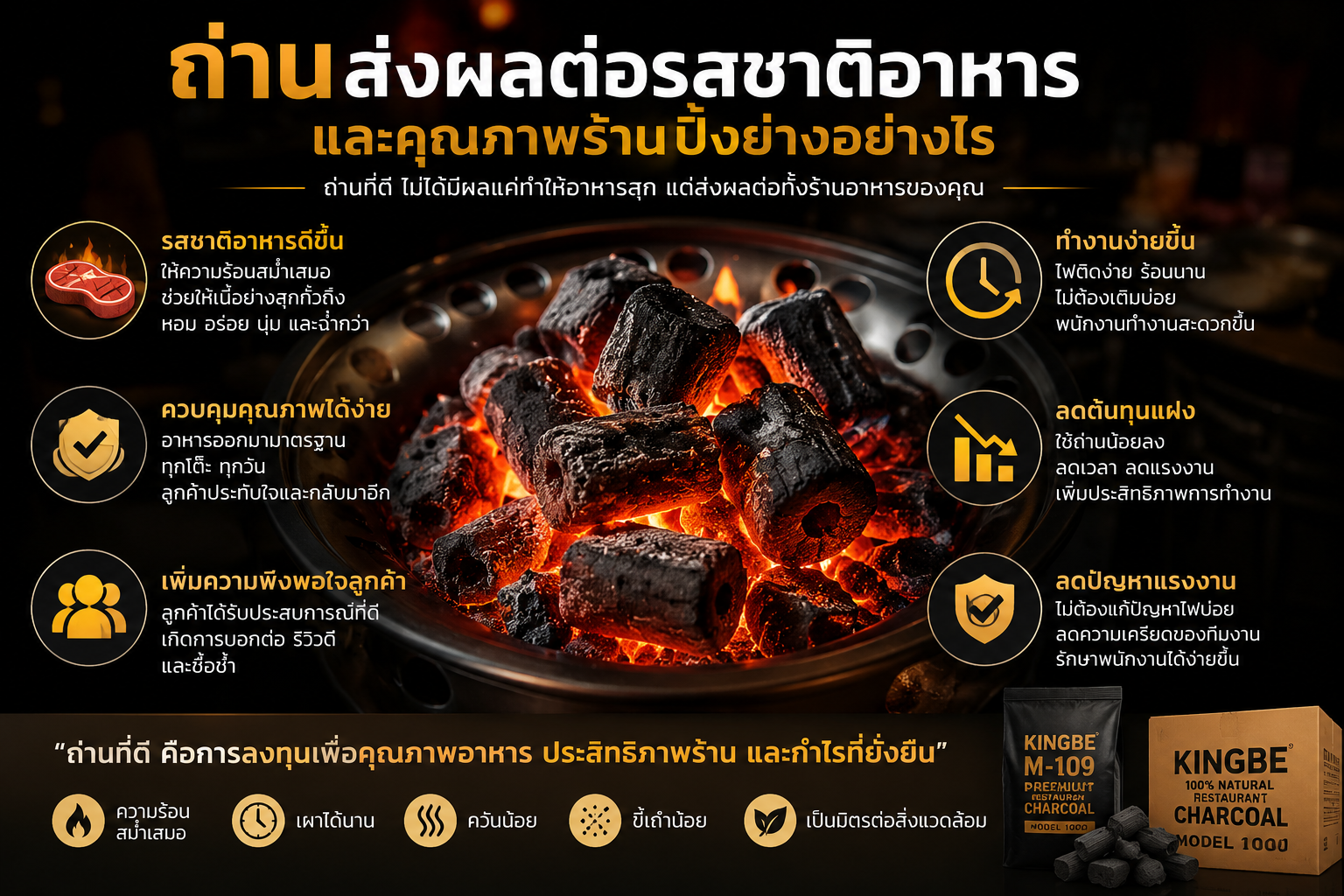
For Korean BBQ restaurants, Yakiniku restaurants, steakhouses, seafood grills, and Mookata businesses, charcoal is much more than a fuel source. It directly affects food quality, kitchen efficiency, staff productivity, and customer satisfaction.
A premium grill cannot consistently produce premium results if the charcoal quality is poor.
Why Charcoal Affects Food Quality
Most customers do not know what type of charcoal a restaurant uses.
What they notice is the final result on the plate.
They recognize whether the meat is juicy or dry, whether the sear is attractive or uneven, and whether the cooking experience feels consistent every time they visit.
When charcoal produces unstable heat, food quality becomes inconsistent. One table may receive perfectly grilled meat, while another receives food that is overcooked or undercooked.
Over time, this inconsistency affects customer satisfaction, online reviews, repeat purchases, and word-of-mouth recommendations.
Consistent Heat Creates Consistent Food
One of the biggest challenges in restaurant operations is maintaining consistency throughout the day.
A restaurant may have excellent recipes, experienced staff, and premium ingredients, yet still struggle to deliver the same results if heat levels constantly change.
Professional restaurants look for charcoal that provides:
Consistent temperature
Predictable burn performance
Stable cooking conditions
Reliable heat output
When the heat remains stable, staff can reproduce the same cooking results from opening until closing time.
This is one reason why many successful BBQ restaurants focus on charcoal quality instead of simply choosing the lowest-priced option.
Good Charcoal Reduces Labor Problems
Many operators underestimate the labor cost associated with poor charcoal.
When charcoal quality is inconsistent, staff often spend more time:
Adding charcoal repeatedly
Replacing fuel during service
Relighting weak fires
Adjusting cooking times
Responding to customer complaints
These extra tasks consume labor hours and increase stress during busy service periods.
In contrast, stable charcoal allows staff to focus on food preparation and customer service rather than constantly managing the fire.
The result is smoother operations, faster table turnover, easier employee training, and more predictable restaurant performance.
Fuel Cost Is Not the Same as Operating Cost
Many buyers compare charcoal based only on price per kilogram.
Professional restaurant operators evaluate total operating cost.
Cheaper charcoal may burn faster, require more frequent replacement, generate excessive ash, and produce inconsistent heat.
A higher-quality charcoal may cost more initially but often burns longer, delivers more usable heat, reduces labor requirements, and improves food consistency.
The difference in restaurant performance frequently outweighs the difference in purchase price.
Customer Retention Starts With Consistency
The first restaurant visit creates curiosity.
The second visit happens because the experience was consistent.
Restaurants that consistently deliver proper searing, stable cooking temperatures, and excellent flavor are more likely to receive repeat customers, positive reviews, and strong word-of-mouth recommendations.
In many cases, charcoal plays an important role in achieving that consistency.
What Professional BBQ Restaurants Look For
Experienced restaurant operators typically evaluate charcoal based on:
Heat stability
Burn duration
Smoke production
Ash content
Ease of ignition
Operational consistency
The objective is not simply to find the cheapest fuel.
The objective is to find the most reliable fuel.
About KINGBE
For more than 80 years, KINGBE has supplied charcoal solutions for restaurants, Korean BBQ businesses, Yakiniku restaurants, steakhouses, seafood restaurants, and commercial grilling operations.
Our product range includes restaurant-grade charcoal briquettes, premium hardwood charcoal, white charcoal, and coconut shell charcoal products designed for professional food service operations.
By working closely with chefs, restaurant owners, and commercial kitchens, KINGBE helps businesses improve cooking consistency, fuel efficiency, and overall grilling performance.
Conclusion
Charcoal is not just another consumable item.
It is a critical part of the cooking system.
The right charcoal helps restaurants achieve better food quality, more consistent cooking results, easier staff management, fewer operational problems, and stronger customer retention.
The most successful BBQ restaurants understand that consistency creates loyalty.
And consistency starts with the fire. |