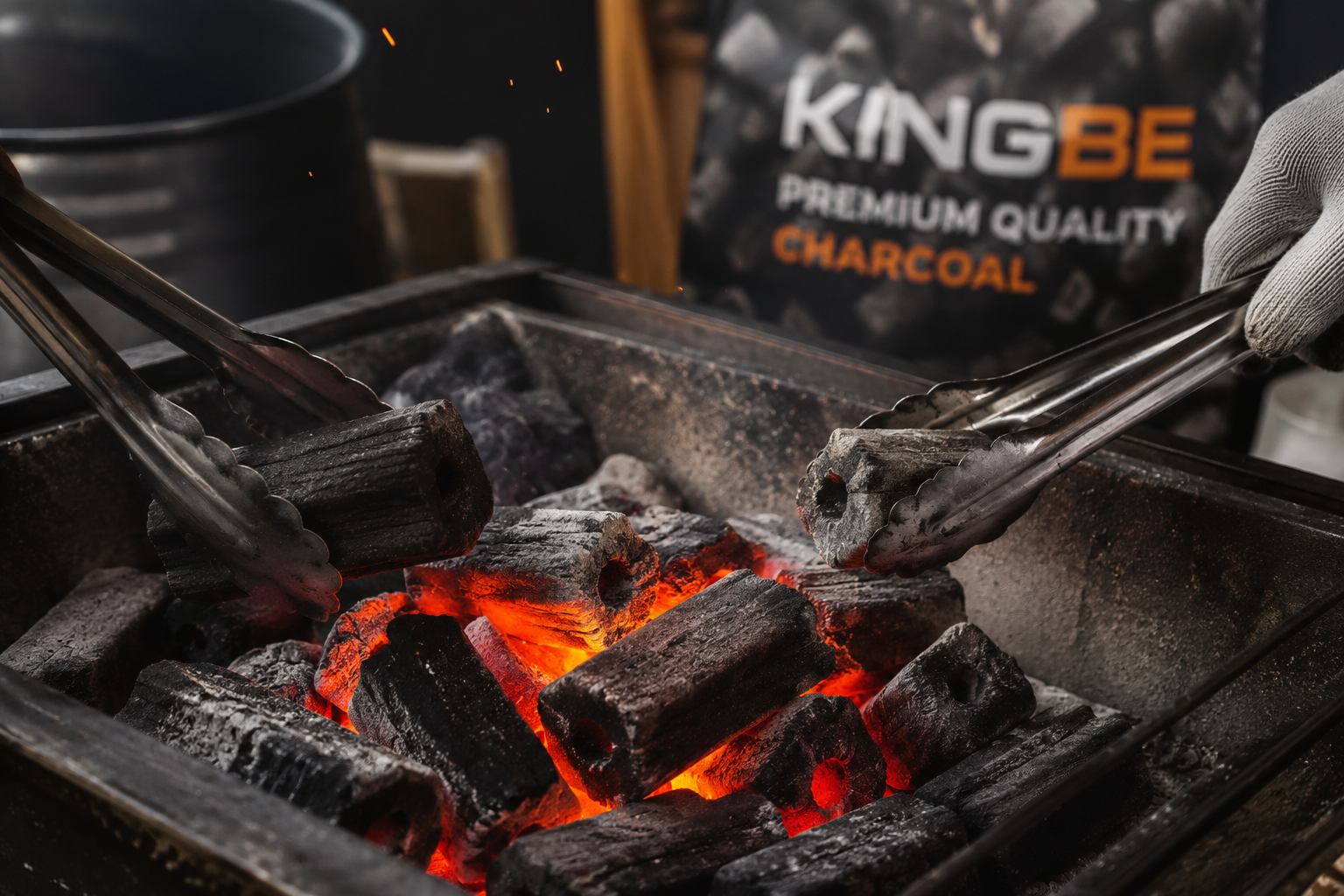
Cheap Charcoal vs Premium Charcoal: Which One Is More Cost Effective for Restaurants?
Introduction
Many restaurant owners choose charcoal based primarily on the price per bag.
However, the cheapest charcoal is not always the most economical option.
In many cases, low quality charcoal can increase operating costs due to frequent refilling, inconsistent cooking performance, and additional labor requirements.
Why Is Cheap Charcoal Less Expensive?
Cheap charcoal is often produced from lower quality raw materials or manufacturing processes that prioritize volume over performance.
As a result, it may produce inconsistent heat, shorter burning time, excessive ash, and require more frequent replacement during service.
These factors can affect both food quality and restaurant efficiency.
What Makes Premium Charcoal Different?
Premium charcoal is designed to provide stable heat, longer burning time, and more consistent performance.
For restaurants, the most important factor is not maximum temperature but the ability to maintain reliable heat throughout service hours.
Consistent charcoal helps reduce interruptions, minimize refilling frequency, and improve food quality across all tables.
The Real Cost of Charcoal
Many businesses compare charcoal products based only on purchase price.
However, the true cost should also include
Fuel consumption per day
Refill frequency
Labor requirements
Food consistency
Customer satisfaction
In many situations, a slightly more expensive charcoal product may result in lower overall operating costs.
Which Type of Charcoal Is Best for Restaurants?
Korean BBQ restaurants, buffet restaurants, and Mookata restaurants typically require charcoal that burns longer and provides consistent heat.
Yakiniku restaurants, Wagyu restaurants, and premium dining concepts often require higher heat and greater temperature stability.
Choosing the right charcoal for the restaurant concept can improve operational efficiency and reduce long term costs.
Conclusion
The cheapest charcoal is not always the most cost effective solution.
For restaurants, heat consistency, burn duration, and total operating cost are often more important than the purchase price alone.
Selecting the right charcoal can help reduce costs, improve food quality, and create a better dining experience for customers.
Cost-in-Use Comparison: KINGBE Coconut Briquette vs Ordinary Wood Charcoal
Per kilogram, KINGBE coconut shell briquette costs more than ordinary wood charcoal. But because it burns 2 to 3 times longer, the real cost per hour of cooking is comparable to or lower than ordinary charcoal, with far less ash, no sulfur, and fewer refills.
| Factor | KINGBE Pure Coco (coconut shell) | Ordinary wood charcoal (mangrove / mixed) |
|---|
| Price per kg |
49 THB/kg |
20-23 THB/kg |
| Burn time (equal weight) |
3-5 hours |
1-2 hours |
| Temperature |
450-550 C (steady) |
400-450 C |
| Ash content |
Low (4.24%) |
High |
| Sulfur |
Not detected |
Often present / odor |
| Refills per 3-hour service |
0-1 |
2-3 |
| Cost per hour of use |
~12.4 THB/hr |
~13-16 THB/hr |
Compared at equal charcoal weight. Ash and sulfur figures from Prince of Songkla University (Report R3821/61) and Central Laboratory Thailand (Report TRSK61/22307). |