Too Much Smoke From Your Charcoal Grill? 5 Causes Restaurants Miss

If your extraction fans are running at full power and diners are still complaining about stinging eyes and smoke in their clothes, the problem usually is not the ventilation. It is the charcoal you buy and how your staff top up the grill — both cheaper and faster to fix than rebuilding an extraction system.
Smoke at the table comes from five places
- Charcoal served before it is fully lit (by far the most common)
- Damp charcoal from poor storage
- Binders or contaminants in low-grade briquettes
- Too much charcoal dust blocking airflow
- Raw charcoal added on top of burning charcoal
1. Charcoal served before it is fully lit
Freshly lit charcoal still contains volatile compounds. As they burn off they leave the grill as white smoke with a sharp smell. Once the charcoal is properly lit, which you can see when a grey-white ash film forms on the surface, the smoke almost disappears and only heat remains.
Quick check: if the pieces are still jet black all over and there are open flames, the charcoal is not ready to serve.
Fix: light charcoal in batches away from the dining area, let it pass through the smoky phase in the kitchen, then transfer it to the table grill. Restaurants that change only this step usually see complaints drop the same day without changing charcoal at all. If lighting time is the bottleneck during the dinner rush, charcoal starters and grilling equipment shorten that phase considerably and make the charcoal you serve more consistent from table to table.
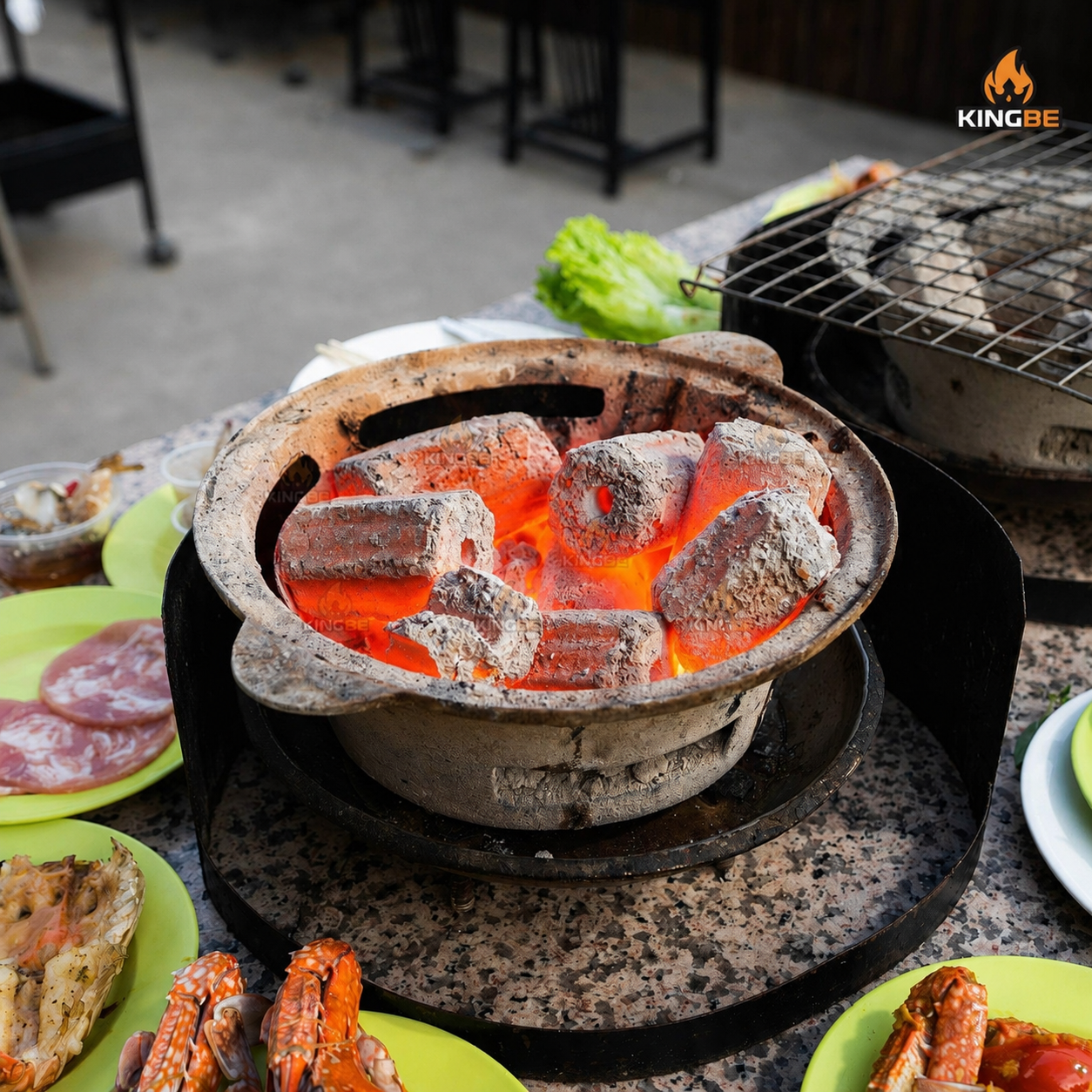
Properly lit charcoal: a grey-white ash film across the surface. This is the point at which the grill should reach the table.
2. Damp charcoal
Charcoal absorbs moisture from the air continuously, especially during the rainy season or when sacks sit directly on a concrete floor. That moisture has to be driven off by heat before the charcoal will light properly, and that is exactly when the heaviest white smoke appears.
Quick check: knock two pieces together. Dry charcoal rings with a light metallic sound; damp charcoal sounds dull.
- Store sacks on pallets or shelving, never directly on the floor
- Keep charcoal away from sinks, chillers and anywhere water drips
- Once a sack is opened, use it within a few days
- For larger stock, decant into lidded charcoal bins instead of leaving sacks open
3. Binders and contaminants in the charcoal
Some low-cost briquettes use binders to make forming easier and to add weight. Those binders do not burn cleanly, and what is left becomes smoke and the smell that follows diners home. In worse cases, painted timber, plywood or other material that has no business being in charcoal ends up in the mix, which is a health issue rather than just an odour one.
Quick check: light two or three sample pieces in the open, wait until they are fully lit, then smell them. Good charcoal is almost odourless once lit. A harsh or plastic-like smell means something is in there that should not be.
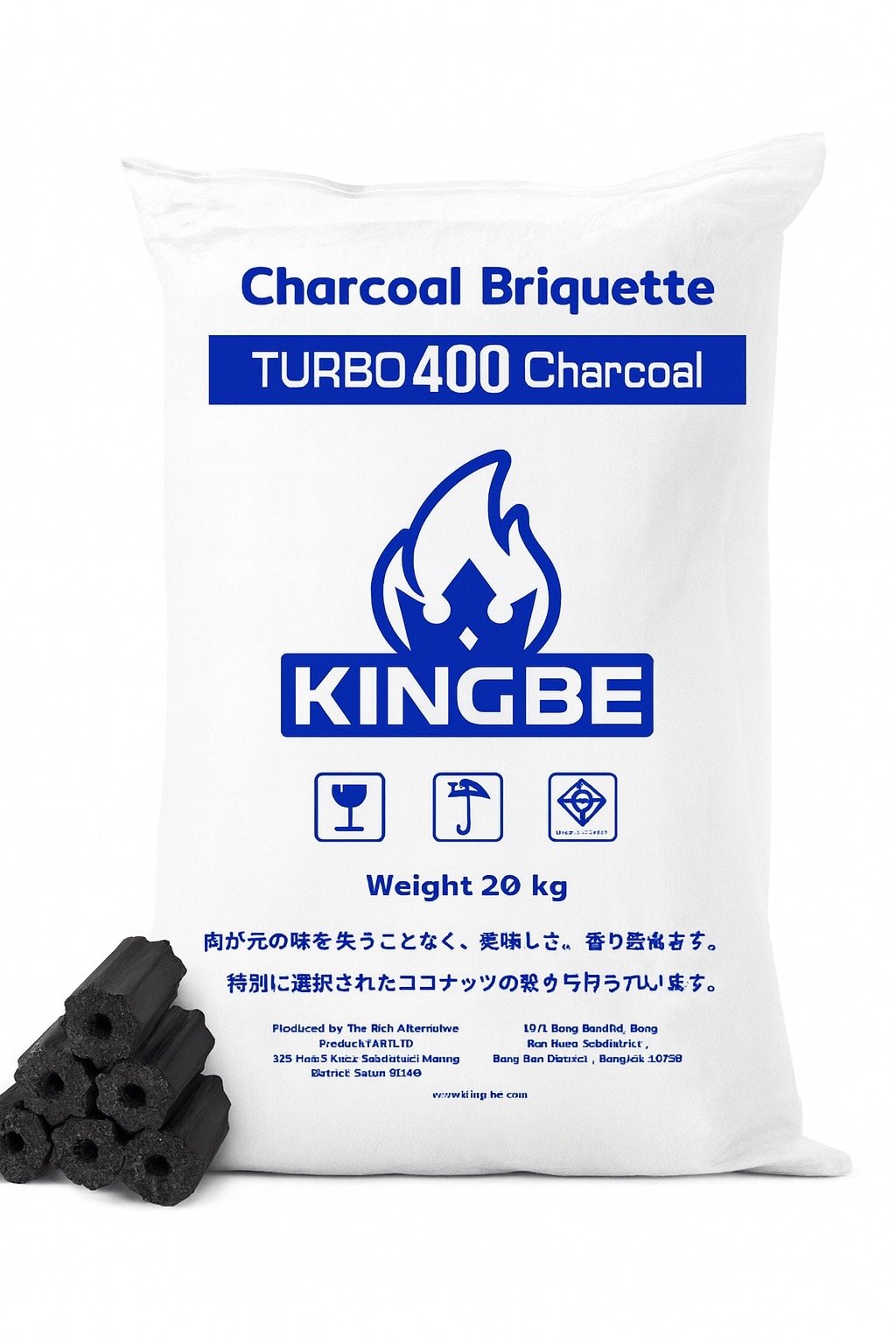
Fix: switch to charcoal whose raw material is clearly stated. Coconut shell briquettes are a common choice for table-grill restaurants because coconut shell is naturally dense, low in smoke and low in ash. Hardwood briquettes suit kitchens that need sustained high heat at a controlled cost. Before committing to a large order, ask your supplier what the charcoal is made from, where it is produced and what documentation exists. KINGBE manufactures its own charcoal and can answer all three.
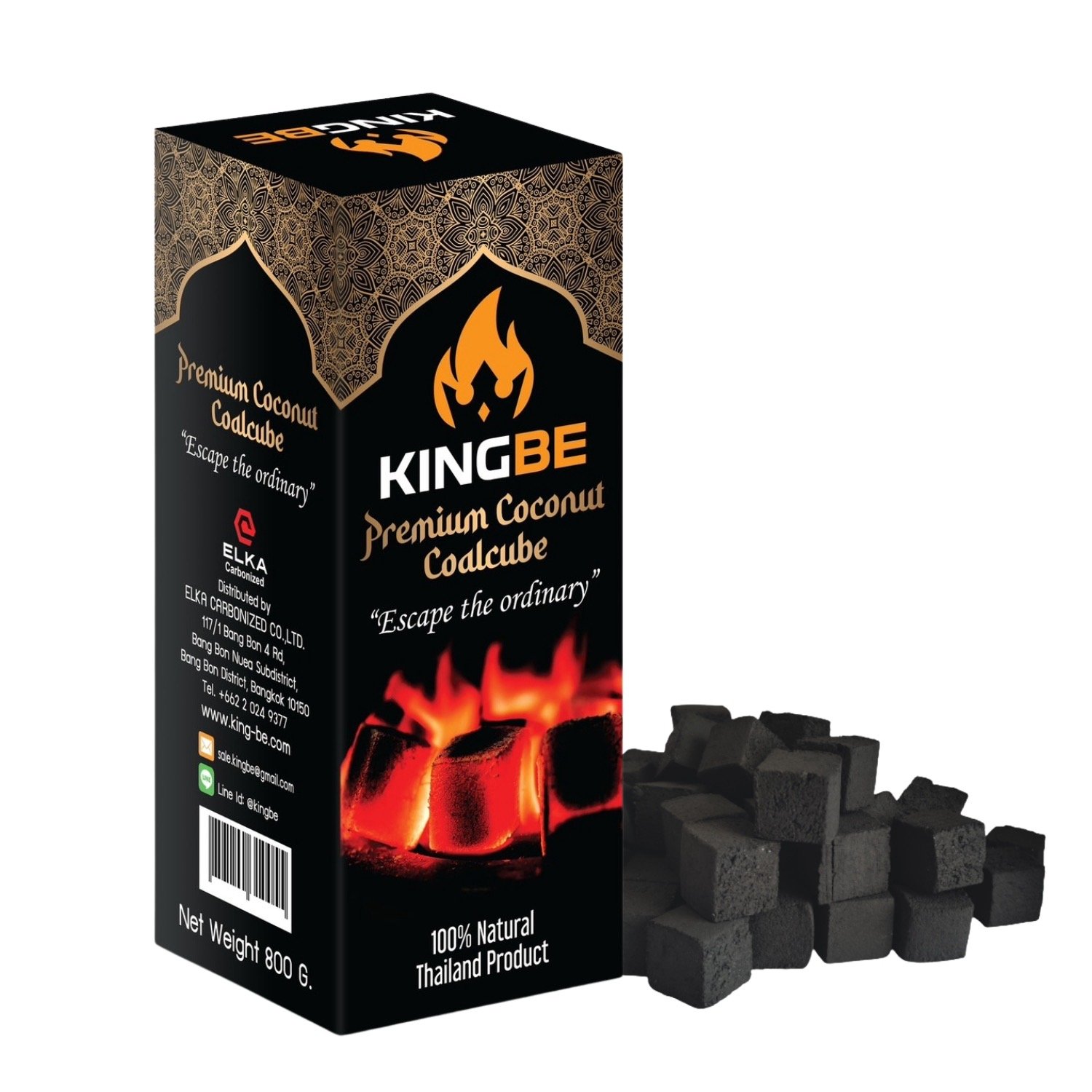
Charcoal that states its raw material on the packaging. If a supplier cannot tell you what the briquette is made from, that is the answer.
4. Charcoal dust blocking airflow
Charcoal needs air moving through it to burn completely. When the bottom of the grill fills with dust and ash, airflow stalls, combustion becomes incomplete, and you get more smoke with less heat. Excessive dust usually points to low density charcoal, or to sacks that have been thrown around in transit.
Quick check: empty a new sack onto a tray. An unusual amount of dust at the bottom means that batch is brittle.
- Clear ash from the grill base more often, rather than waiting until it fills up
- Choose densely compressed charcoal with a hole through the centre so air can pass through the core
- For multi-grill operations, an ash vacuum is far faster than clearing by hand and does not force you to take tables offline
Dense briquettes with a hole through the centre keep air moving through the bed, which is what keeps combustion complete and smoke low.
5. Raw charcoal added on top of burning charcoal
When the heat drops, staff usually tip fresh charcoal straight onto the fire. The new pieces then go through their smoky phase directly in front of the customer.
Fix: keep a holding grill with charcoal already lit, and top up from that instead. The smoke stays in the kitchen and the heat never drops. If the heat is fading so quickly that you have to top up constantly, the real issue is that your charcoal does not burn long enough for your table turnover, which is a grade decision rather than a technique one.
Symptom table
| What you see | Likely cause | Where to fix it |
|---|---|---|
| Heavy white smoke in the first 10 minutes at every table | Charcoal not fully lit | Process: light in batches in the kitchen |
| Smoke only during the rainy season | Damp charcoal | Storage, lidded bins |
| Harsh smell in customers clothes | Binders or contaminants | Change charcoal supplier |
| Lots of smoke but weak heat | Blocked airflow, ash build-up | Clear ash more often, or move to denser charcoal |
| Smoke spikes when topping up | Raw charcoal on burning charcoal | Keep pre-lit charcoal in reserve |
Where to start
- Change the process first. Light charcoal in the kitchen and keep a pre-lit reserve. This costs nothing and most restaurants see the difference within a day.
- Check how charcoal is stored. Get sacks off the floor and away from damp.
- If both of those are done and the smoke and smell remain, the charcoal itself is the problem and it is time to change supplier.
KINGBE manufactures charcoal briquettes in Satun, Thailand and supplies restaurants and hotels directly. If you would like us to look at whether the charcoal you use now suits your grills and your table turnover, get in touch and tell us what kind of restaurant you run, how many tables, and roughly how many kilograms you go through each month.