Charcoal Hard to Light: Is It the Charcoal or Your Method?
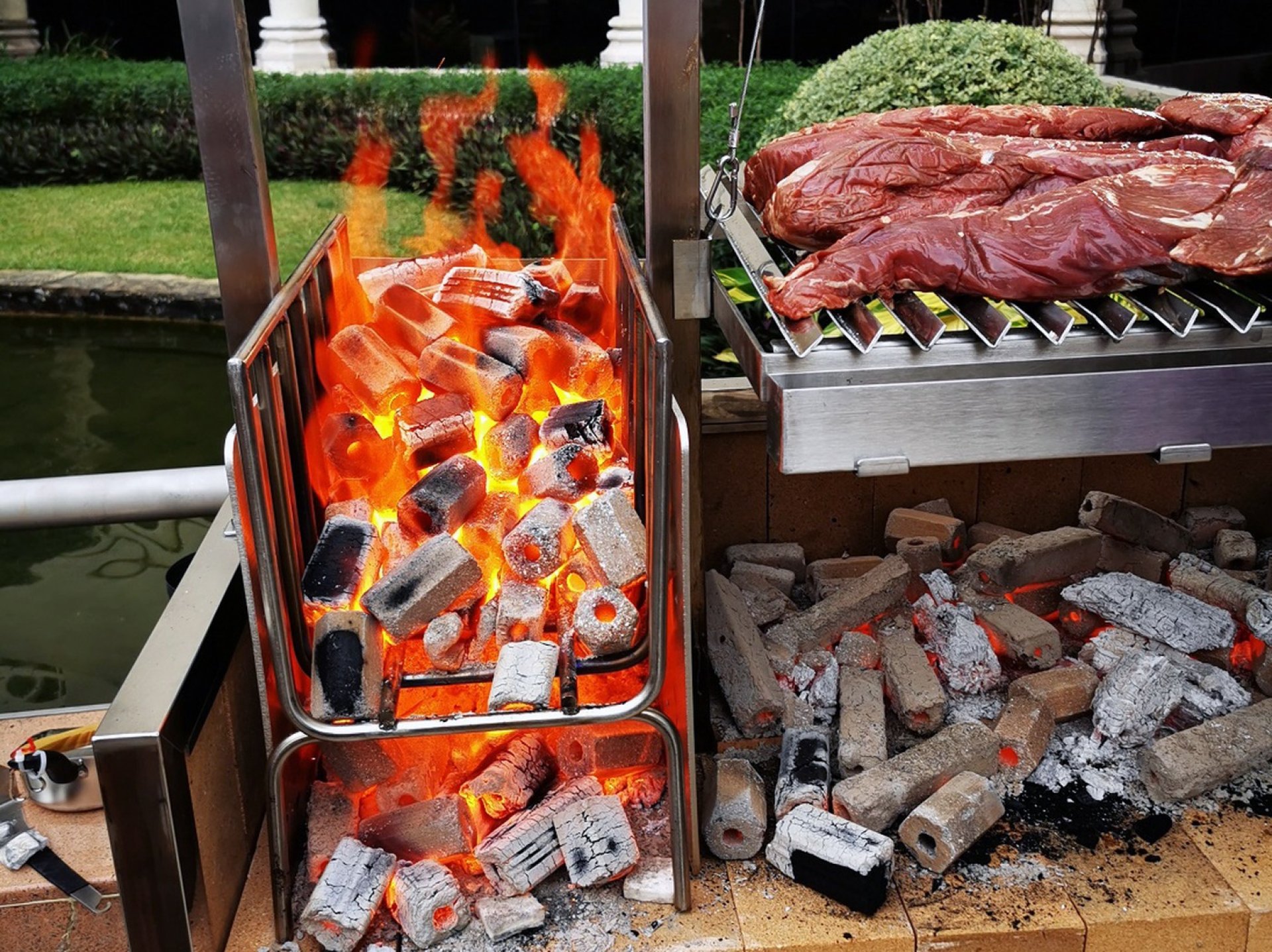
Before you change supplier, work out where the problem actually is. Plenty of restaurants switch charcoal and hit exactly the same issue, because the real cause was the lighting procedure, not the fuel.
A ten-minute test. Take charcoal from the same sack and light it outdoors, in a grill with a bottom air vent, stacked into a cone. If it lights normally, the problem is your procedure or your grills. If it is still slow, the problem is the charcoal.
Case 1: the problem is the procedure
Not enough air, the number one cause
Charcoal needs air moving up through it. If air cannot get in, nothing you do will make it light quickly. Check three things.
- Blocked bottom vent. Ash builds up at the base and closes the vent without anyone noticing. Clear it before every light.
- Wrong stack shape. Charcoal tipped in flat lights far more slowly than charcoal built into a cone, because a cone lets heat travel up through the pieces.
- Too much charcoal at the start. Begin with a small amount, get it lit, then add more. Do not fill the grill and light it in one go.
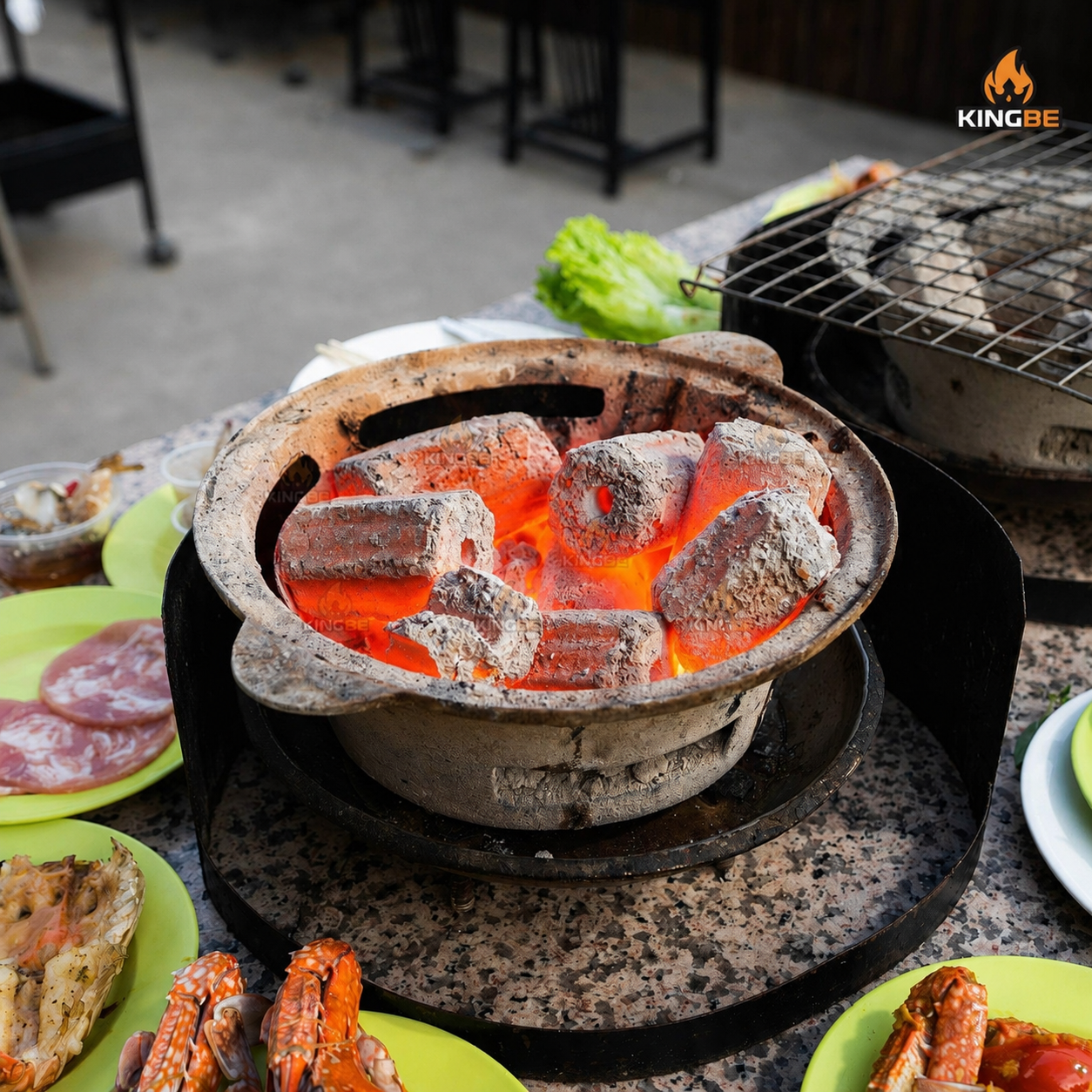
A cone, not a flat bed. Heat travels upward through the stack and the pieces above catch from the ones below.
Not waiting for the charcoal to actually catch
Charcoal with flames on it is not lit charcoal. Wait until a grey-white ash film forms on the surface. Serving before that gives you weak heat plus smoke and smell at the table.
Using accelerants the wrong way
Pouring oil or alcohol straight onto charcoal produces a brief flare and then nothing, because it burns on the surface rather than into the piece. It also leaves a smell in the food and is extremely dangerous on charcoal that is already hot. Never do it.
Case 2: the problem is the charcoal
Damp charcoal
The moisture has to be driven off by heat before the charcoal starts to catch. That is wasted time on every light. Knock two pieces together: dry charcoal rings, damp charcoal sounds dull.
Too dense for the way you light it
Very densely pressed charcoal gives high, long-lasting heat but takes longer to catch. That is a property, not a defect. White charcoal is the clearest example: hardest to light, longest lasting. If you choose dense charcoal, the method has to match it. Use a chimney starter or a charcoal starter, not newspaper.
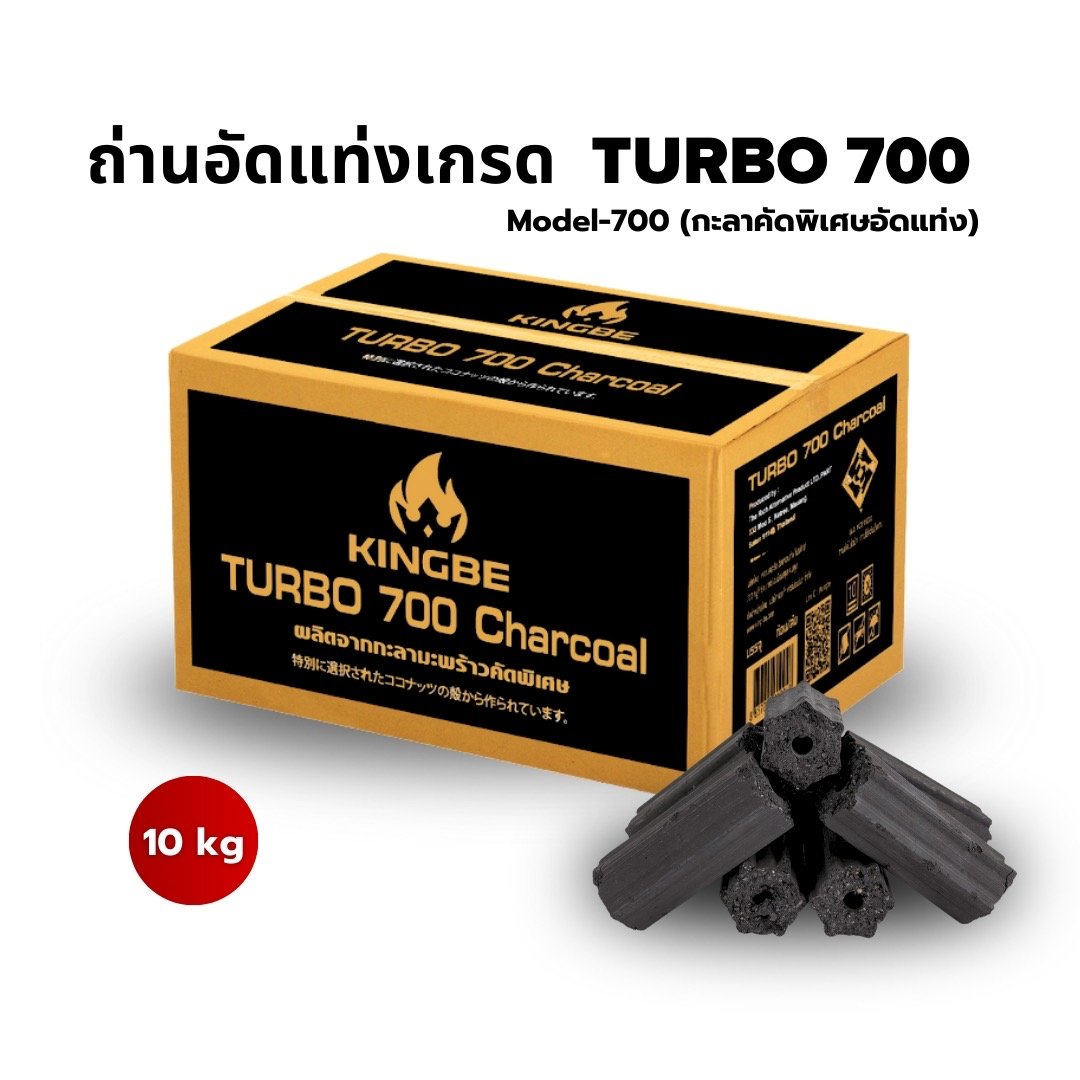
Denser charcoal is not harder to light by accident. It is a trade for burn time, and the lighting method has to match it.
Piece size wrong for the grill
Pieces that are too large for a small grill light slowly because the whole piece has to come up to temperature. Charcoal with a lot of dust blocks the airflow. Both light slowly, for opposite reasons.
Undercooked at the factory
Charcoal that was not fully carbonised still holds moisture and volatiles. It lights slowly, smokes heavily and pops easily. If you see all three symptoms in one batch, the problem is production, not your kitchen.
Symptom table
| Symptom | Probably | Fix |
|---|---|---|
| Slow on some grills only | The grill, not the charcoal | Clear ash, open the vent |
| Slow on all grills, only since this batch | The new batch | Tell the supplier, ask for a replacement |
| Slow only in the rainy season | Moisture | Change storage, use lidded bins |
| Slow, smoky and popping | Undercooked charcoal | Change supplier |
| Lights but heat is weak | Airflow or dust | Clear ash, or change grade |
| Lights fast, burns out fast | Low density charcoal | Move to a denser grade |
Lighting faster when you open many grills at once
- Light away from the table. No extra cost. Set up a lighting station in the kitchen, light in batches, then transfer lit charcoal to the service grills. Tables are ready immediately and the early smoke stays out of the dining room.
- Keep a lit reserve. A holding grill with charcoal already burning through the rush means you top up instantly instead of lighting again.
- Use a charcoal starter. For operations opening more than ten grills at once, a gas charcoal starter pays back quickly by cutting both staff time and customer waiting, which during the rush means extra covers.
- Pick an easier-lighting grade for front-of-house grills. With fast table turnover, coconut shell briquettes are the balanced choice: not hard to light, low smoke, low ash.
Never do this
- Never pour oil or alcohol onto charcoal that is already hot. Flame travels back up the stream instantly. This is the most common cause of kitchen accidents with charcoal.
- Do not blast a fan at charcoal that is catching. It scatters sparks.
- Never light charcoal in an enclosed space. Incomplete combustion produces carbon monoxide, which is colourless and odourless. Always light in a well-ventilated area.
Summary
Separate the two first: take the same charcoal and light it outdoors, correctly. Lights normally means the issue is in your kitchen. Still slow means the issue is the charcoal.
In most cases we see, the answer is both: middling charcoal plus a procedure that was never designed for the rush. Fix the procedure first because it is free, then look at the fuel.
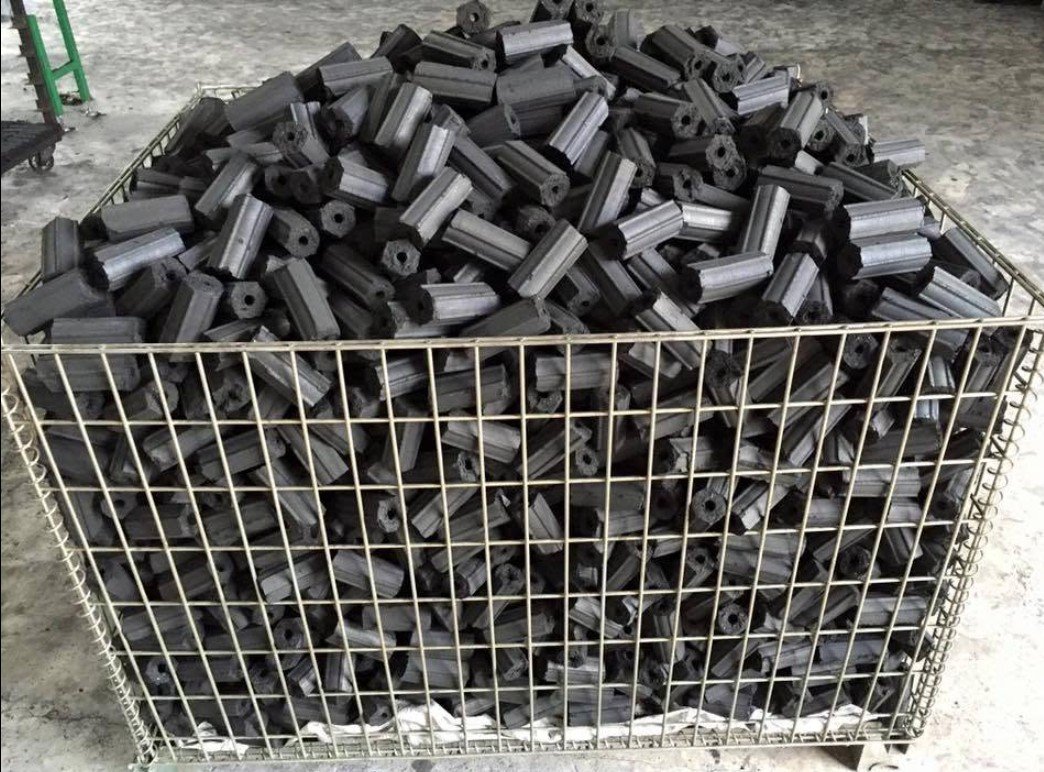
Charcoal that reaches you dry lights on schedule. Storage at the factory matters as much as storage in your kitchen.
If you would like us to check whether your current charcoal suits your grills and your table turnover, get in touch. KINGBE, charcoal briquette manufacturer in Satun, Thailand.