Charcoal Popping and Sparking: Why It Happens and How to Stop It

Charcoal that cracks and throws burning fragments is more than an annoyance. In a restaurant it ends in burns on a guest's arm, holes in clothing, or in the worst case a fire started by a spark landing on something flammable.
Short answer: the risk is real, and almost all of it can be prevented at source. Charcoal that is properly produced and properly stored barely pops at all. If yours pops often, that is a signal about the charcoal, not something you have to live with.
Why charcoal pops
Every case comes down to the same mechanism: something inside the charcoal expands faster than the charcoal can vent it. The pressure builds, splits the piece and flings a fragment out. Four things cause that pressure.
1. Trapped moisture
The most common cause. Water in the pores flashes to steam the moment it meets high heat. If the charcoal is too dense to vent that steam, it cracks. Sacks stored on a concrete floor, kept near a sink, or left in a humid room overnight in the rainy season are far more likely to pop.
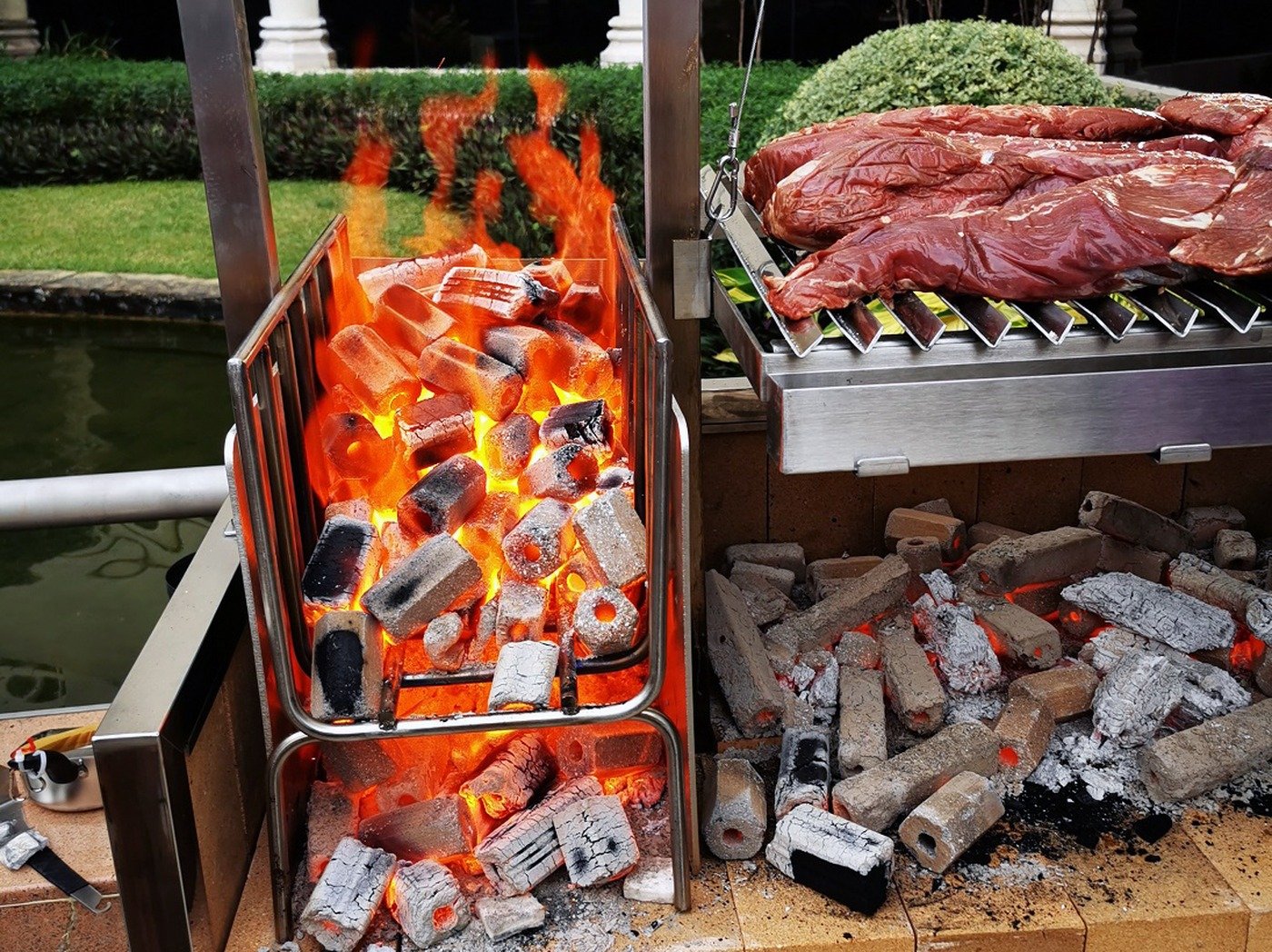
Dry charcoal burns quietly. If your bed is spitting, moisture is the first thing to rule out.
2. Resins and volatiles that were never burned off
Charcoal that was undercooked during production still holds resins and volatile compounds. On a hot grill they gasify quickly and split the piece. This is why some cheap batches pop far more than others: the carbonisation was cut short to save cost.
3. Contaminants
Stones, soil, nails, plywood fragments and other foreign material from uncleaned feedstock. These expand at different rates from the charcoal itself, so they crack it easily, and some release smoke that has no business near food.
4. Inconsistent density within a piece
Briquettes made from a variable mix, or pressed unevenly, heat unevenly. The hot part expands against the part that is still cold and the piece breaks apart.
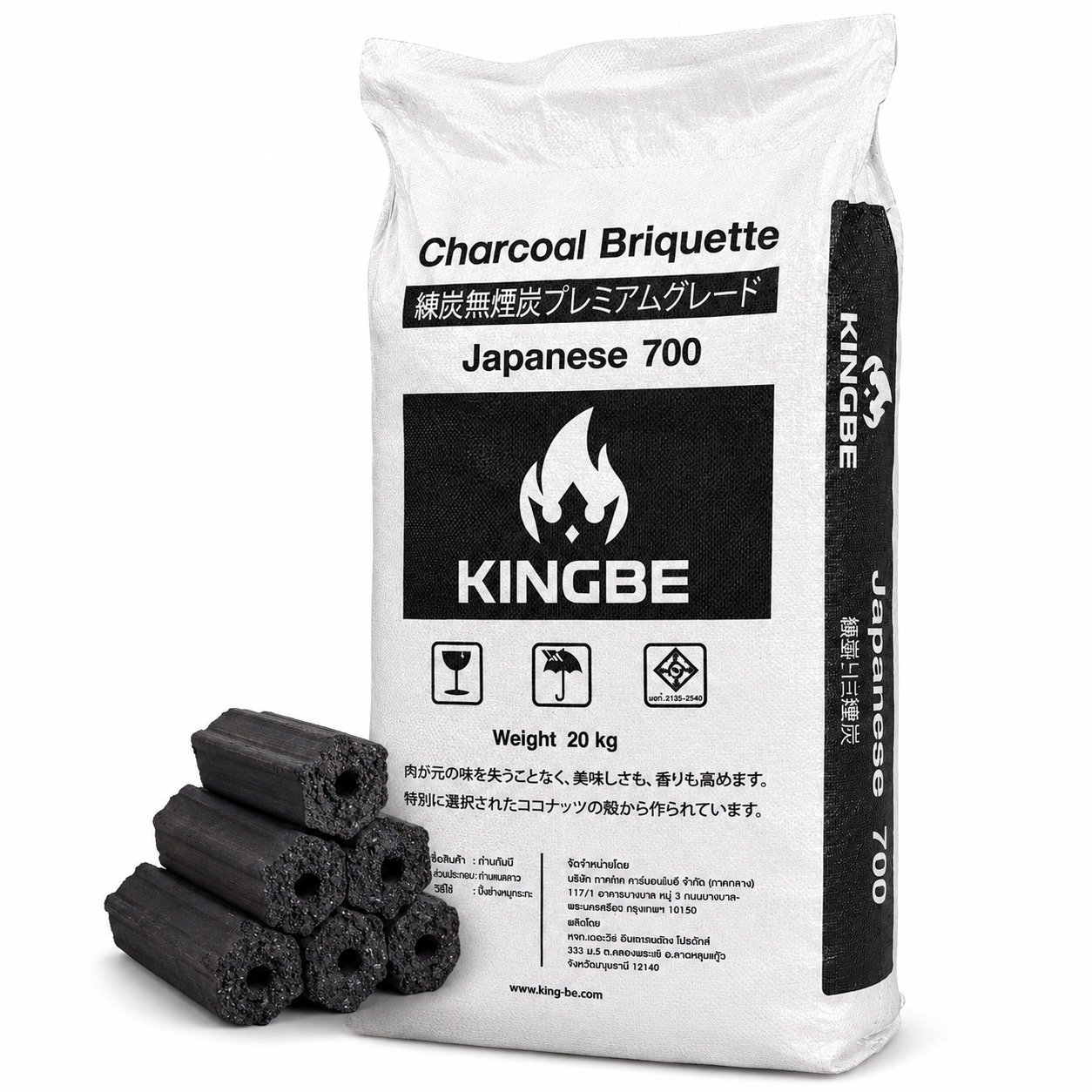
Uniform density is what stops a piece from breaking apart. Look for briquettes that are the same colour and hardness right through.
Which types pop most
| Type | Tendency to pop | Note |
|---|---|---|
| Natural lump charcoal | Highest | Wood grain structure intact, with air pockets and resin still present |
| Low-grade briquettes | High | Undercooked, contaminated, or unevenly pressed |
| Properly made briquettes | Low | Homogeneous, fully carbonised |
| White charcoal (binchotan style) | Very low | Fired at very high temperature, exceptionally dense |
This is a large part of why restaurants with grills on the customer's table, from hot pot to yakitori, move away from lump charcoal to pressed briquettes: the risk is far easier to control.
How to test charcoal before a large order
- Popping test. Light five to ten pieces in a grill outdoors. Lay white paper around it out to about a metre. Leave it 20 to 30 minutes, then count the scorch marks. Good charcoal should leave almost none.
- Smell test. Wait until the charcoal is fully lit, when a grey-white ash film has formed, then smell it. Any sharp or unfamiliar smell means volatiles are still present.
- Consistency test. Snap three or four pieces from different parts of the sack and look at the cross-section. It should be one colour throughout and similar in density.
- Moisture test. Knock two pieces together. Dry charcoal rings; damp charcoal sounds dull.
Run all four on every supplier you are considering, on the same day and the same grill, or the results will not be comparable.
What to ask your supplier
- What is the charcoal made from? A clear answer, not just "mixed wood".
- Where is it produced? Own factory or bought in and resold. Resellers cannot control batch-to-batch quality.
- Is the feedstock screened for contaminants? This step is what separates restaurant-grade charcoal from general charcoal.
- If a batch is bad, can you claim? A supplier confident in their product answers this immediately.
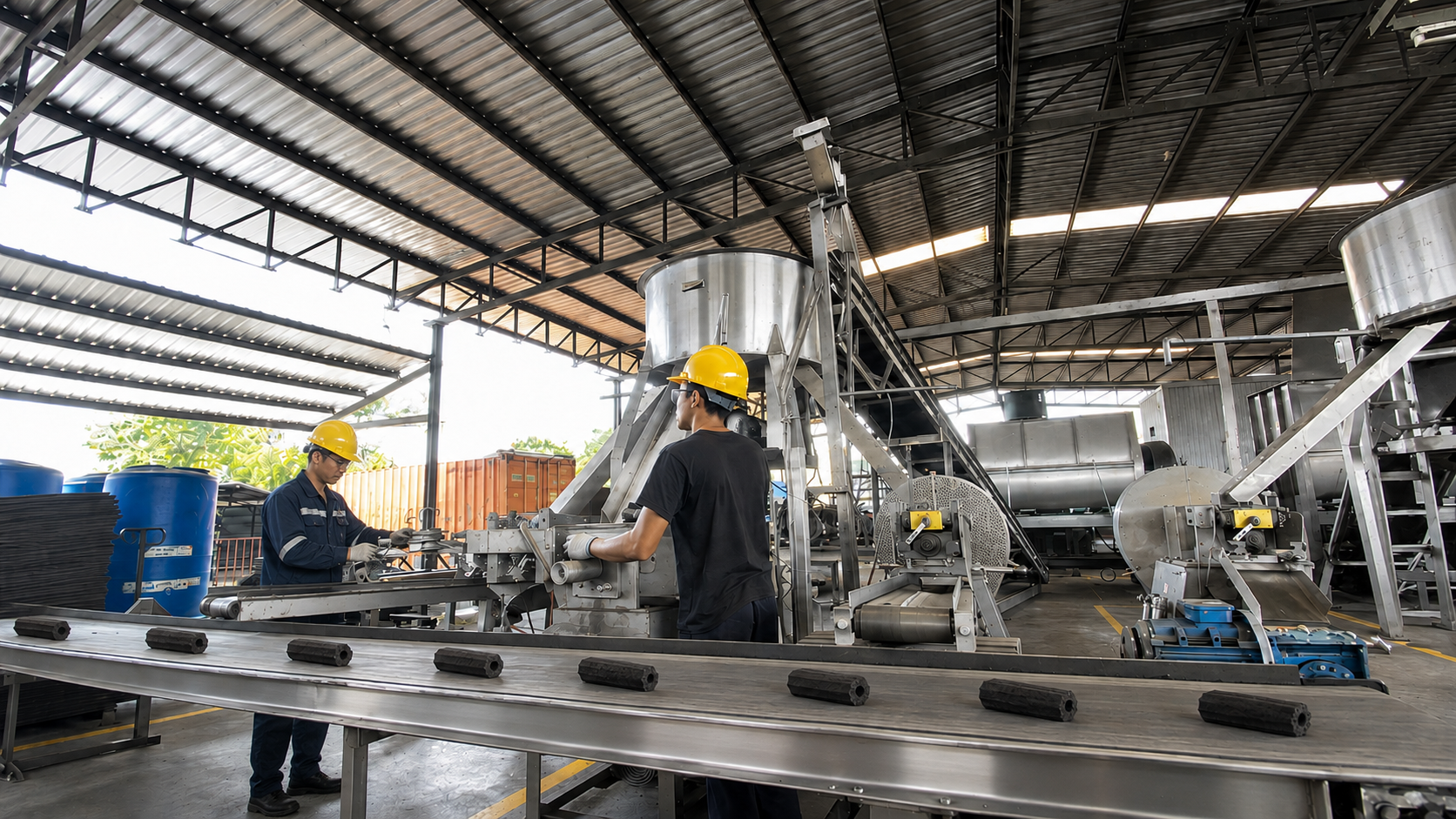
A supplier who owns the factory can answer all four questions. A reseller usually cannot.
Storing charcoal so it does not pop
- Off the floor. Pallets or shelving, never sacks straight onto concrete.
- Away from water. Not near sinks, chillers, pipework or anywhere that drips.
- Sealed. Decant opened sacks into lidded bins rather than leaving them open overnight.
- First in, first out. Use the oldest stock first.
- Careful in the rainy season. Hold less stock and order more often instead of buying in bulk.
If charcoal pops during service
- Never pour water onto a hot grill. The steam causes a far more violent burst and can scald anyone standing close.
- Smother it with a lid or sand to cut off oxygen.
- Move the guests away from the table first, then deal with the grill.
- If several tables pop from the same batch, stop using that batch immediately. Do not run it down. Tell your supplier and photograph the remaining stock as evidence.
- Keep a serviceable fire extinguisher and at least one trained staff member on every shift.
Summary
Popping almost always traces back to two things: how the charcoal was made and how it was stored. Both are fixable. It is not something a restaurant should accept as the nature of charcoal.
If your charcoal pops often enough that staff have to watch for it, talk to us. Send a photo of what you use now and we will tell you where the problem most likely sits, and if it is not something that needs a change of charcoal we will say so.
KINGBE, charcoal briquette manufacturer in Satun, Thailand, supplying restaurants and hotels directly.